Key Takeaways
- Kratom is legal in Canada for botanical research and exploration.
- Health Canada requires vendors to comply with specific labeling standards.
- Kratom brands implement certain ingenious strategies to comply with Health Canada’s requirements.
- Laws in both jurisdictions apply when importing kratom from other countries.
Kratom has garnered a tremendous amount of attention in the recent past for its unique botanical profile. While originally from Southeast Asia, the plant has become common in Canada as researchers explore its features.
Many Canadian botanical collectors examine kratom’s characteristics as part of research programs.
But despite kratom’s raging popularity, several regulators worldwide have restricted access to it.
If you’re interested in kratom’s regulations in Canada, it’s important to understand what the law says before analyzing this plant.
Here’s a guide on what is kratom and whether you can legally access it in Canada.
Table of Contents
- Why Is Kratom Trending in Canada?
- Is Kratom Legal in Canada?
- Unpacking Health Canada’s Perspective on Kratom
- Settling Kratom’s Legality Debate
- Frequently Asked Questions
Why Is Kratom Trending in Canada?
We cannot examine kratom Canada legal laws before familiarizing ourselves with the plant and why it’s making huge waves across Canada’s botanical community. While this may sound like a no-brainer, it’s surprising that many Canadians do not have a complete understanding of kratom and its characteristics.
So, what is kratom?
Kratom (Mitragyna speciosa) is a tropical evergreen tree from Southeast Asia famous for its unique botanical profile. According to studies investigating kratom’s characteristics, the herb possesses distinctive botanical traits that make it common in many research programs.
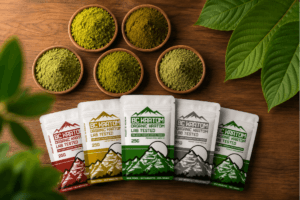
Kratom comes in three principal strains, namely;
- White Vein Kratom: Prepared from young kratom leaves
- Red Vein Kratom: Formulated from older kratom leaves
- Green Vein Kratom: Made from mid-matured kratom leaves
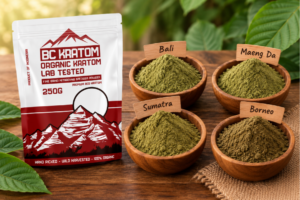
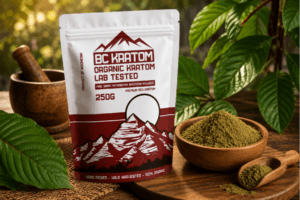
There are several other kratom strains based on their specific origin within Southeast Asia. For instance, BC Kratom’s Red Bali is a red-vein strain from Indonesia’s Bali Province. The powder is prepared from organically obtained, lab-tested kratom leaves.
Is Kratom Legal in Canada?
Since kratom possesses unique botanical attributes, it’s intuitive to imagine the plant is legally accessible worldwide. But that’s not quite the case.
Kratom is heavily regulated in many countries.
In Southeast Asia, where kratom originates, the plant remains illegal in Malaysia, Singapore, and Myanmar. Thailand is perhaps the only major Southeast Asian nation to have decriminalized kratom. And the journey towards legalization was long-drawn, starting with nationwide criminalization in 1943 before the state eventually knocked kratom off its illegal drugs list in 2021.
What of Canada – is kratom legal in Canada?
The short answer is yes. Kratom is legal in Canada to the extent that there’s no express legislation barring access to the plant. That means researchers can freely access varied kratom products in stores spread across Canada.
As noted, each kratom variety has unique characteristics. BC Kratom’s White Indonesian can be explored for research to examine how it compares to Red and Green veins. This product comes with lab-test reports, which include a batch number, to validate its quality.
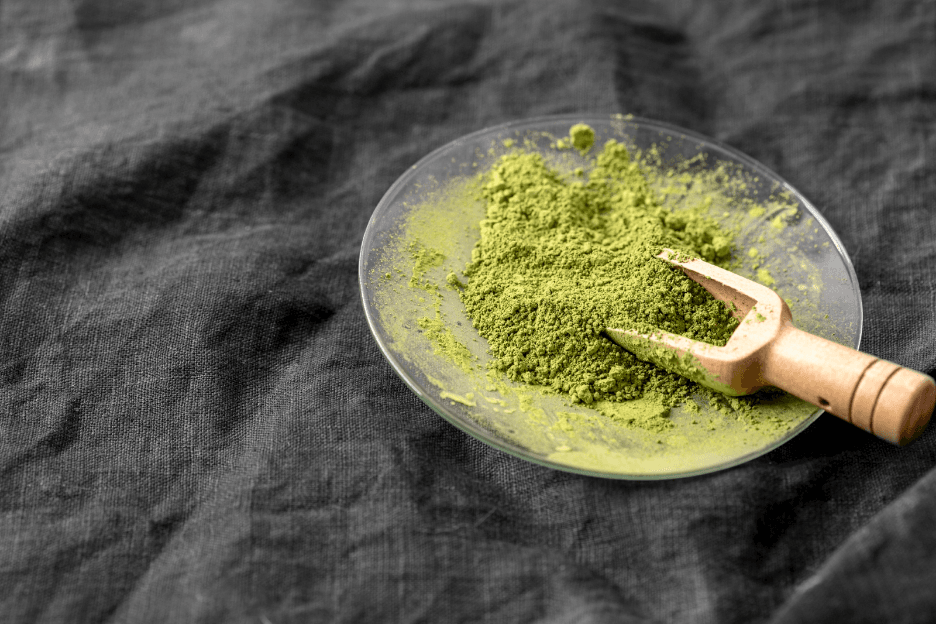
Kratom’s legality in Canada also implies;
- Kratom is generally available throughout the country.
- Traders may import and export kratom in and out of Canada, provided that they comply with the Customs Act and Customs Tariff.
But while kratom is generally legal in Canada, vendors must adhere to certain guidelines. To understand these regulations, we must step back and explore the role of Health Canada in regulating botanicals within the country.
Unpacking Health Canada’s Perspective on Kratom
Health Canada is the federal agency mandated to uphold the safety and quality of pharmaceutical products in Canada.
Despite kratom’s botanical profile, Health Canada is yet to authorize the plant as a Natural Health Product (NHP). In fact, the agency has previously warned Canadians to beware of potential hazards associated with kratom products.
Now, Health Canada doesn’t prohibit Canadians from accessing and exploring kratom. But since it hasn’t officially approved the plant, sellers must comply with strict labeling standards.
Fortunately, vendors have worked out options around Health Canada kratom classification without breaking the law. Those include;
- Labeling products as “not for human consumption.”
- Using the label “for botanical/research purposes only.”
- Using general claims like “kratom possesses unique characteristics” rather than definitive statements like “kratom can cure pain.”
This explains why kratom is generally available in Canada despite Health Canada’s disapproval of it.
Settling Kratom’s Legality Debate
There you have it. If you’ve been wanting to research kratom in Canada but weren’t sure if it’s legal, you can explore the plant without looking over your shoulders.
Perhaps the more pertinent debate right now doesn’t pertain to kratom laws in Canada. But rather, how to access the right products. And that’s where BC Kratom comes in.
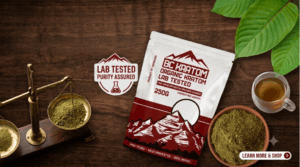
BC Kratom supplies lab-tested kratom extracts to botanical researchers who want to explore this novel herb. The products come with laboratory test reports to validate their batch number and chemical profiles.
Discover our quality-tested kratom, featuring a variety of strains and product formats for your research goals.
Frequently Asked Questions
1. Is kratom currently legal in Canada?
2. How does Health Canada classify kratom?
3. Has kratom’s legal status in Canada changed recently?
4. Are there any provinces where kratom is restricted?
5. Is it legal to sell kratom for human consumption in Canada?
6. Why is kratom often labeled ‘for research purposes only’ in Canada?
7. Could kratom’s legal status change in the future?
We may not predict kratom’s future with pinpoint precision. However, there seem to be no ongoing efforts to classify the herb as a controlled substance in Canada.
Regulations may change over time as authorities analyze emerging information.