Key Takeaways
- “Super” is a tag that sellers add to a strain name. It usually hints at bigger leaves, older leaves, or stricter sorting, but nobody sets a standard for it.
- A 2025 study showed that wilting and drying can shift alkaloid levels, even in leaves picked at the same stage.
- The batch report, not the name, is your best tool for comparing Super Green Kratom with a regular green.
You’re halfway through an order. Green Maeng Da is already in your cart, and right below it sits Super Green. Same vein color, same bag sizes, and one extra word on the label. So, you pause. Is that word telling you something real, or is it there to make you click?
Most shoppers pick an answer and move on. Some assume super means bigger leaves. Others figure it’s an older harvest or a higher grade that the rest of the shelf didn’t make. Ask around and you’ll hear all of those, but none of them really explain what Super Green Kratom is.
Here’s the part most labels leave out. The answer is less about the leaf than about who sorted it, and you can check the seller’s claim before you order.
Table of Contents
- What Does “Super” Mean In Kratom Names Like Super Green, Super Red And Super White?
- Why “Super” Is Not a Regulated Grade
- How Leaf Selection and Processing Change Alkaloids
- Super Green, Super Green Malay, Super Red and Super White Compared
- Why a COA Tells You More Than the Strain Name
- Order Your Super Strain From BC Kratom
- Frequently Asked Questions
What Does “Super” Mean in Kratom Names Like Super Green, Super Red and Super White?
“Super” is a label a seller puts on a batch it considers a step above its standard harvest. It isn’t an official grade, and each seller decides what earns it. Most explanations fall into three groups.
- Bigger leaves: The batch came from the largest leaves on the tree.
- Older leaves: The leaves stayed on the branch longer before harvest.
- Stricter sorting: The batch passed tighter checks for consistency.
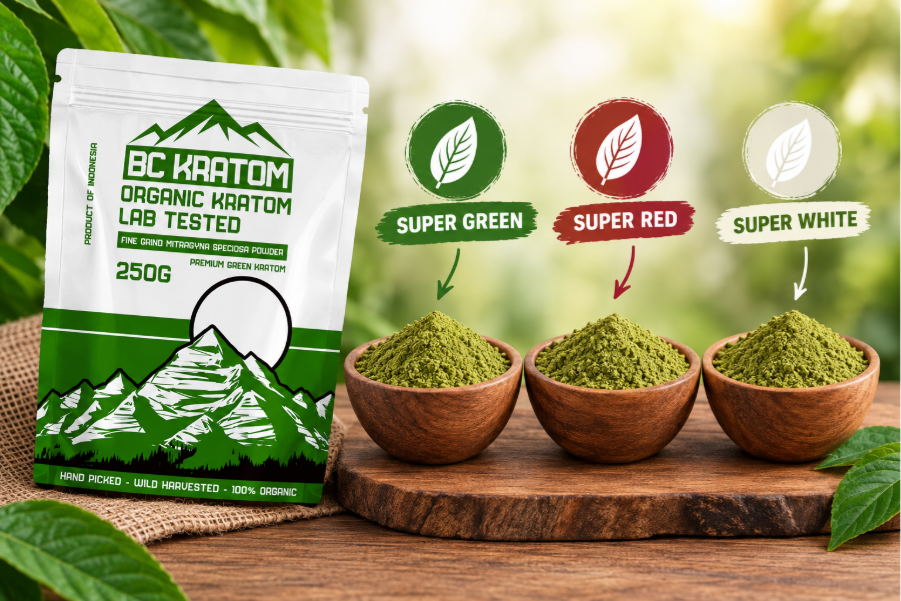
While “super” reflects the seller’s judgment, the color before it is a plain fact about the leaf. Red, green, and white tell you how far along the leaf was in its growth when it was picked, so the two words describe different things. Here’s what each name means.
- Super Green is green vein leaf, picked midway through its growth, that a seller has set apart as a selected batch.
- Super Red comes from more mature leaves.
- Super White comes from leaves picked early in their growth.
BC Kratom picks its Super White kratom for leaf condition, size and processing quality, and Super Green Malay follows a similar selection process.
So, what is Super Green Kratom? It’s green vein Mitragyna speciosa powder that a seller has singled out from a regular harvest. “Green” tells you the leaf’s stage of growth, and “super” tells you about the seller’s sorting. That’s all the name promises, which is why the batch report deserves a look before you buy.
Why “Super” Is Not a Regulated Grade
Maple syrup and beef have official grades in Canada. Kratom doesn’t. Health Canada has not authorized the sale of any product containing kratom, as stated in its advisory on kratom products seized from two Edmonton stores. That’s also why BC Kratom sells kratom as a botanical product and not for human consumption.
Because kratom has no approved product category in Canada, there’s no official standard behind the super name either. No rule sets a minimum leaf size, harvest age, or alkaloid level, so each seller draws that line for itself.
How Leaf Selection and Processing Change Alkaloids
It’s easy to think a super batch is only about which leaves made the cut. But what happens after harvest also counts, because how long the leaves wilt and how hot they’re dried can change their alkaloid content.
A 2025 peer-reviewed study published in Frontiers in Plant Science put this to the test with two kratom cultivars. The researchers picked mature leaves from the same spot on each branch, let some of them wilt for up to 72 hours, and then dried them at temperatures as low as minus 40°C and as high as 80°C. A few results stood out.
- Letting leaves wilt before drying raised mitragynine, the main alkaloid in kratom, by 14 to 65 percent in one cultivar and by 3 to 8 percent in the other.
- Cooler drying kept more mitragynine, along with two other alkaloids, than high heat did.
- Leaves from one harvest came out green or reddish brown depending on the drying heat, and the color didn’t match up neatly with alkaloid content.
- Summer and winter harvests didn’t give the same numbers.
So, a carefully chosen leaf can still lose alkaloids if it’s dried too hot, and two bags of Super Green Kratom from one shop could test differently because the leaves came from different seasons.
Super Green, Super Green Malay, Super Red and Super White Compared
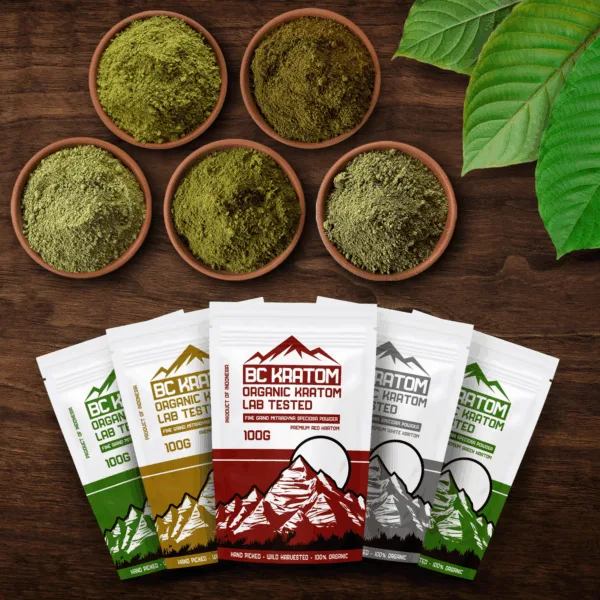
Super Green Kratom gets the most attention, but it isn’t the only super strain on the shelf. Here’s how the four common names line up.
| Strain | Vein color | Leaf stage | What the name points to | Where BC Kratom files it |
| Super Green | Green | Mid-growth | A sorted batch of green vein leaf | Green vein and super ranges |
| Super Green Malay | Green | Mature leaf, per BC Kratom | Sorted green vein leaf under the Malay trade name | Green vein range |
| Super Red | Red | Mature leaf | A sorted batch of red vein leaf | Red vein and super ranges |
| Super White | White | Early harvest | A sorted batch of young leaf | White vein and super ranges |
The “Malay” in the name points to Malaysia, though kratom strain names often follow old trade routes more than a farm’s location, so the name alone won’t tell you where a batch grew.
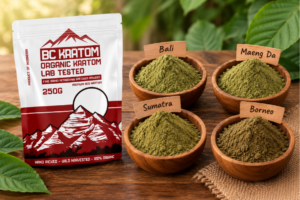
You might also see the same strain sold as Super Green Malaysian Kratom, and some shops sell a Super Green Bali. BC Kratom doesn’t carry a Super Green Bali, but Bali is another strain name that doesn’t match where the leaf grows. Bali kratom takes its name from old trading ports on the island, while most of it now grows in other parts of Indonesia, such as Kalimantan and Sumatra.
Why a COA Tells You More Than the Strain Name

The super label is the seller’s claim about a batch, and a certificate of analysis (COA) is how you check that claim. A COA is a report from an independent lab on one specific batch. When you get one, look for these details.
- A batch or lot number that matches your bag.
- The mitragynine percentage.
- Results for heavy metals, mold, and bacteria.
- The lab’s name and the test date.
Then do a side-by-side comparison. Pull the report for a Super Green Kratom batch and one for a regular green from the same shop. If the numbers are almost the same, you’re mostly paying for the name.
This kind of comparison only works with third-party kratom testing. An outside lab isn’t selling the product, so its results show what’s in the batch, not what the seller hopes is in it. Lab numbers aren’t everything, though.
In addition to lab numbers, the freshness of the powder and the source of the leaf also contribute to what makes kratom premium in Canada.
Order Your Super Strain from BC Kratom
BC Kratom’s super range includes Super Green, Super Red, Super White, and Super Blend. Super Green, Super Red, and Super White come in sizes up to 1 kg, priced $9.99 to $209.99, and orders paid before noon Pacific time on weekdays ship the same day.
Ready to order? Add Super Green Kratom to your cart, or choose Super Red or Super White if you prefer a different vein color. If you’d like to compare it with a standard strain, add a bag from the green vein kratom range to the same order.