Key Takeaways
- Yellow isn’t a vein color. It’s what happens to the leaf after picking, mostly during withering and drying.
- Every supplier does it a bit differently, and nobody has published a standard process.
- In a 2025 study, drying temperature alone changed powder color, while alkaloid levels didn’t follow along neatly.
- Kew lists kratom as introduced to Vietnam, where it’s now cultivated in the south.
- If you want to know what’s in a bag, read the batch’s lab report, not its color.
You’re scrolling through a kratom store, and right between the usual red, green, and white strains, there’s a yellow one. Most people pause right there. Is it a new kind of leaf? A rare tree? Or only a fancy label?
As it turns out, no kratom tree grows yellow leaves. The color comes from what happens after the leaves are picked, mostly how long they sit and how they’re dried. Tea works the same way. Green tea and black tea can come from the same plant, and the difference is all in the processing.
Then there’s the name. Vietnam isn’t a country most people connect with kratom, so a Yellow Vietnam kratom label raises a second question. Where does this leaf even come from? Once you know how the yellow color gets made and where this leaf grows, you’ll know exactly what you’re buying and what to ask before you order.
Table of Contents
- What Yellow Kratom Means
- Vietnam as an Origin
- Yellow Vietnam Compared With Green and White Vein Kratom
- How to Read the COA for Yellow Vietnam
- Ordering Yellow Vietnam in Canada
- Frequently Asked Questions
What is Yellow Vietnam Kratom and How is Yellow Kratom Made?
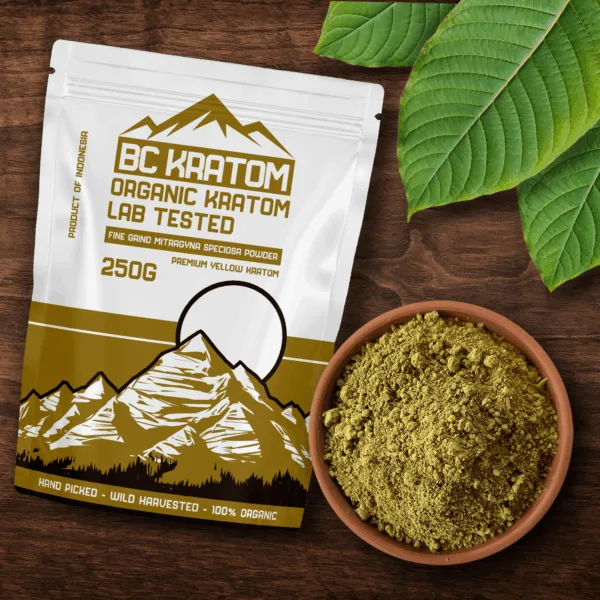
Yellow Vietnam kratom isn’t a separate vein color. In the kratom trade, white, green, and red tell you roughly how old a leaf was when it was picked. Yellow describes something else entirely, which is why you’ll sometimes find it listed alongside white vein kratom instead of in a category of its own.
Yellow refers to how the leaf is processed after harvest. Most vendors take green or white vein leaf and let them wither and dry longer until they turn golden. A few skip that step and blend finished powders instead. Two bags can share the yellow name and still be pretty different, so don’t assume one seller’s version matches another’s.
How Yellow Kratom Is Processed After Harvest
Yellow Vietnam is made from a leaf that’s from Vietnam and gets extra time in postharvest processing before it’s milled.
A leaf keeps changing for hours after it’s picked. The green color slowly fades, and the longer the leaf sits before drying, the more it fades. Going by vendor descriptions, the process usually looks something like this.
- Leaves get picked and sorted, typically from green or white vein stock.
- They wither for longer than they would for a regular powder.
- Drying happens with the heat and light kept low, so the leaf goes golden instead of reddish brown.
- Then it’s all milled down to a fine powder.
You won’t see many producers share exact hours or temperatures. If you run into a very precise “yellow recipe” online, it’s probably one farm’s habit, not an industry rule.
What Research Says About Drying and Color
Researchers at the University of Florida tested this in a 2025 study on kratom postharvest processing. Leaves dried at high heat turned reddish brown, while those dried at cooler temperatures remained green. In one plant variety, letting the leaves wither before drying raised mitragynine, the main alkaloid in kratom, by 14 to 65 percent.
Even so, some powders that looked nothing alike had similar alkaloid levels. The team’s conclusion was pretty clear. Color tells you how the leaf was handled, not what’s in it.
Yellow Vietnam Kratom as an Origin
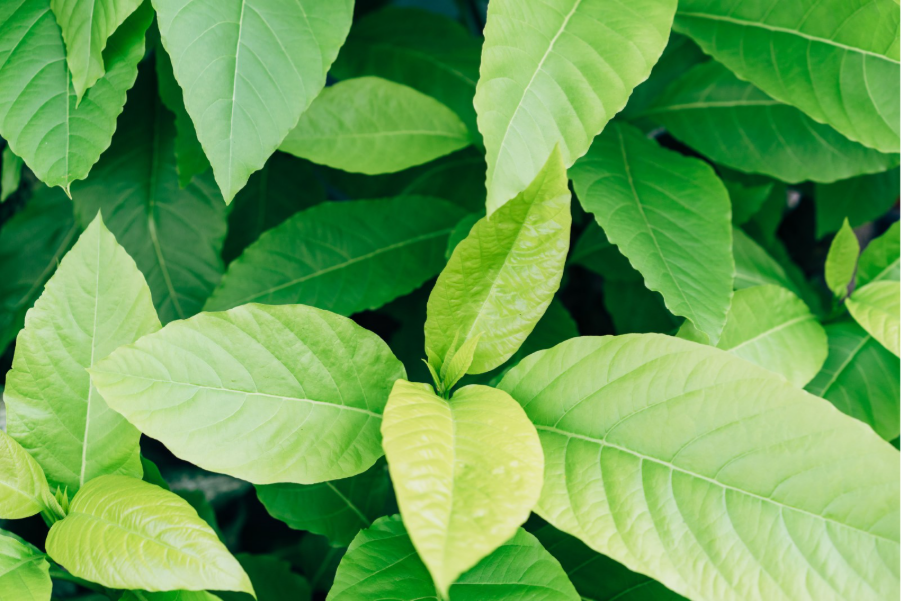
Kratom has local Vietnamese names, and it’s been growing in the country for a long time. Even so, Kew’s plant database lists Vietnam as a place where the tree was introduced rather than native, and the PROSEA database notes that it’s cultivated in southern Vietnam. Southern Vietnam suits the tree well.
PROSEA notes that kratom often grows in swampy riverside forests that flood from time to time, and southern Vietnam has plenty of that kind of land.
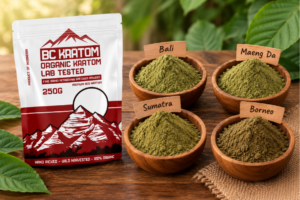
BC Kratom’s batch comes from a forest along the Mekong River. That’s a little unusual for a shelf that mostly leans on Indonesia. The origin is a good background on Yellow Vietnamese Kratom, but genetics and harvest season can shift alkaloid levels too, so the batch test still has the final word.
Yellow Vietnam Compared with Green and White Vein Kratom
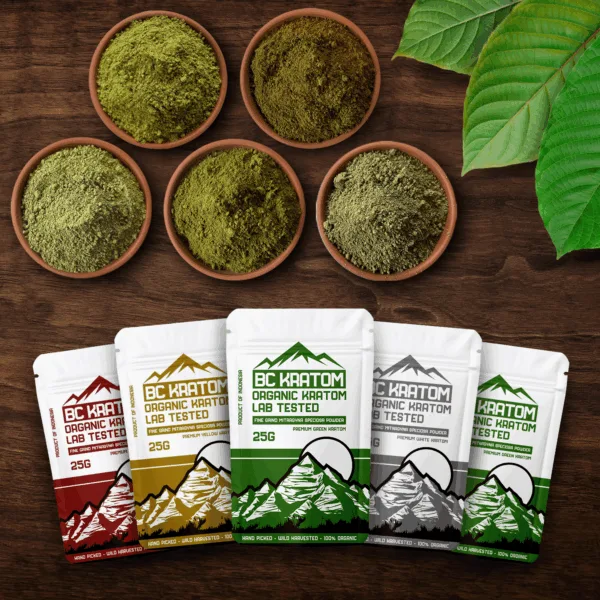
Comparing yellow with green and white is a bit like comparing a coffee roast with a coffee bean. One’s about processing. The others are about how old the leaf was.
| Yellow Vietnam | Green Vein | White Vein | |
| What the label describes | How the leaf was finished | Leaf picked in mid-life | Leaf picked young |
| Drying stage | Extended | Moderate | Usually short, in shade |
| Where BC Kratom files it | White vein | Green vein | White vein |
Next to green vein powder, Yellow Vietnam kratom usually looks lighter and a bit warmer. Next to white, it’s a closer call, since both often start as young leaf. If you want a green strain to measure Vietnam Yellow Kratom against, Green Maeng Da is a good pick, and its aroma profile and origin are well documented.
How to Read the COA for Yellow Vietnam
Every batch of Yellow Vietnam kratom should come with a certificate of analysis from an independent lab. Every product at BC Kratom goes through third-party lab testing and gets packed in its GMP facility’s food-grade clean room. Start by matching the lot number to your bag, then look for these.
- % w/w: This means weight by weight. If it says 1.2% w/w mitragynine, that’s 1.2 grams per 100 grams of powder.
- Powder or extract: Extract numbers look much bigger. The Florida samples landed around 0.2 to 1.5 percent mitragynine as powder, but 2 to 8.5 percent as extract.
- ND versus below LOQ: ND means the lab didn’t detect anything. Below LOQ means there’s a trace, but it’s too small to measure reliably. You may see this next to 7-hydroxymitragynine, which naturally occurs at low levels.
- Heavy metals and microbes: Each result should have the lab’s limit listed beside it, and the result should fall below that limit.
Lab paperwork is one of the five signals for spotting premium kratom in Canada, along with sourcing, alkaloid content, freshness, and packaging.
Ordering Yellow Vietnam in Canada
BC Kratom stocks yellow vietnam kratom for sale in sizes between 25 grams and 1 kilogram, priced from $9.99. Orders paid before noon Pacific on weekdays ship the same day, with free expedited shipping on orders over $75. Ready to buy Yellow Vietnam Kratom? Choose your size, add a second strain from BC Kratom’s full lineup if you’d like, and place your order today.
BC Kratom sells kratom only as a botanical product. Health Canada has not approved it for human consumption.