Key Takeaways
- Kratom originated from Southeast Asia.
- The plant has a unique botanical profile.
- Kratom is generally available across Canada for research and exploration.
- Kratom comes in multiple formulations.
If you’ve recently come across kratom, you’re probably wondering what it is and why it’s receiving so much attention.
Native to the tropical forests of Southeast Asia, kratom (Mitragyna speciosa) is a botanical that has sparked growing interest among researchers because of its unique alkaloid profile and diverse strain varieties.
Whether you’re just starting to learn about kratom or looking to better understand its origins, characteristics, and available product formats, it helps to begin with the basics.
Thus, this blog walks you through what kratom is, where it comes from, how it’s commonly categorized, and what to know before exploring it in Canada.
Table of Contents:
- What Is Kratom?
- Tracing Back Kratom History
- What Does Kratom Contain?
- What Are Kratom Strains?
- Exploring Kratom’s Botanical Characteristics
- Types of Kratom Products
- Kratom Storage Guidelines
- Conclusion
- Frequently Asked Questions
What Is Kratom?
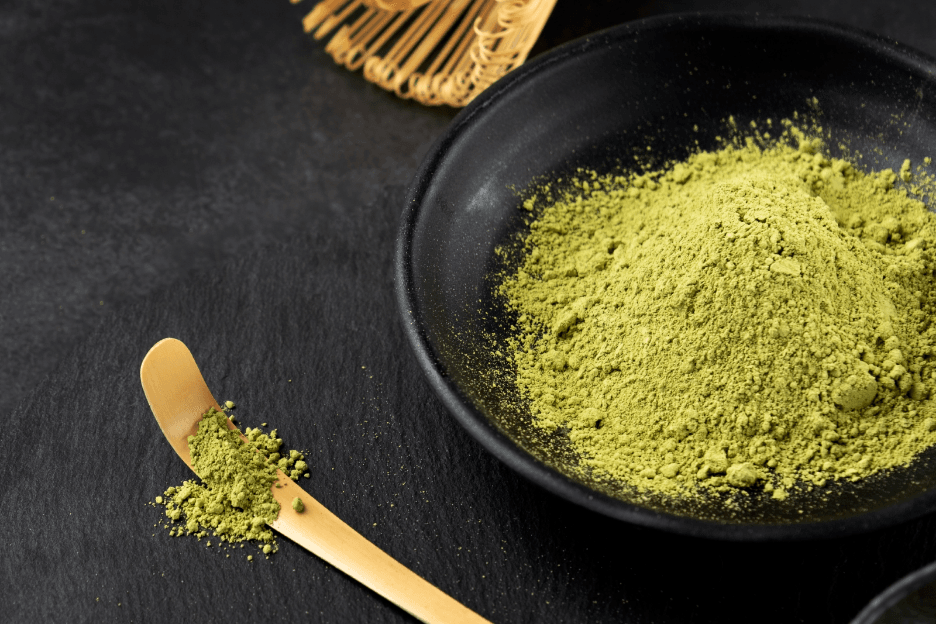
Kratom (Mitragyna speciosa) is a tropical evergreen tree noted for its distinct biological characteristics.
While almost unheard of in Canada a few decades ago, kratom has attracted growing interest among Canadian botanical researchers and enthusiasts. They are increasingly exploring kratom, comparing its different strain profiles.
Tracing Back Kratom History
Mitragyna speciosa may have gained mainstream recognition in Canada more recently. But in the plant’s native range of Southeast Asia, communities have used and studied the plant for generations.
Although kratom has gained considerable attention in Canada, many vendors still source the herb from its native habitat, including;
- Thailand
- Indonesia
- Malaysia
- Parts of southern Myanmar
What Does Kratom Contain?
Research has shown that kratom contains dozens of bioactive alkaloids, the most prominent ones being mitragynine and 7-hydroxymitragynine.
Kratom alkaloids primarily function as the plant’s natural defense mechanism, protecting it against environmental stressors and pests.
Kratom’s characteristics depend on the growing conditions, extraction method, and storage techniques.
What Are Kratom Strains?
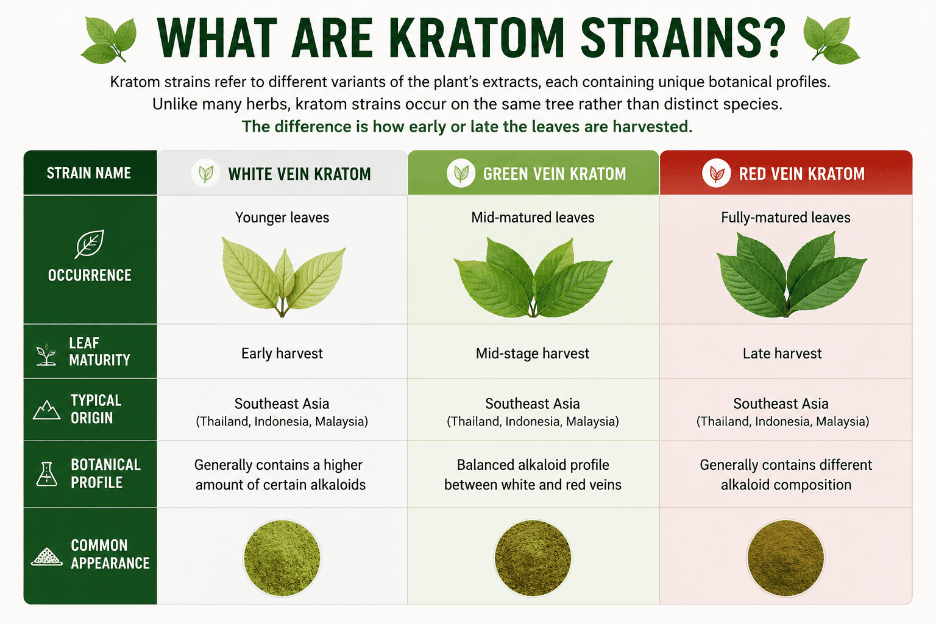
Kratom strains refer to different variants of the plant’s extracts, each containing unique botanical profiles.
Unlike many herbs, kratom strains occur on the same tree rather than distinct species. It is commonly categorized into White, Green, and Red vein varieties. These categories are generally associated with vein color, harvesting practices, and post-harvest processing methods that create distinct botanical profiles.
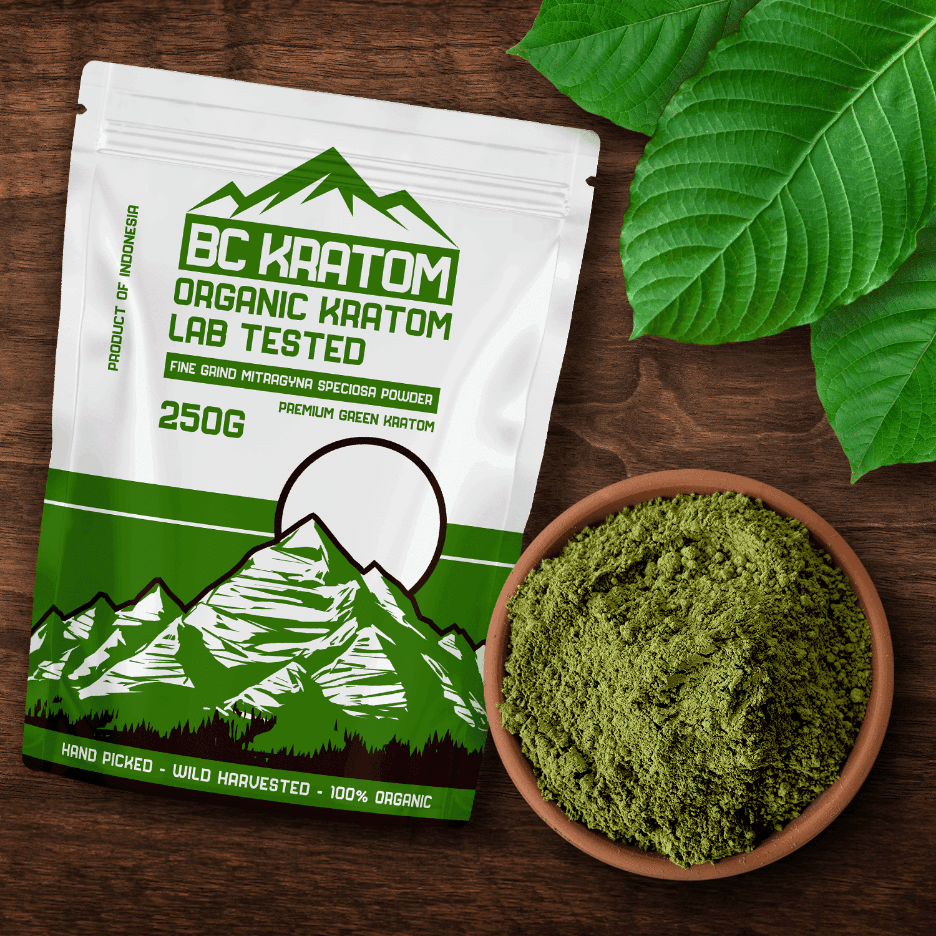
Kratom strains may also derive from a plant’s native range within Southeast Asia. For instance, this Super Green Malay is a green-vein strain from Malaysia.
Exploring Kratom’s Botanical Characteristics
Alkaloids give kratom its distinct botanical characteristics. Besides, these compounds occur in varying amounts in different strains.
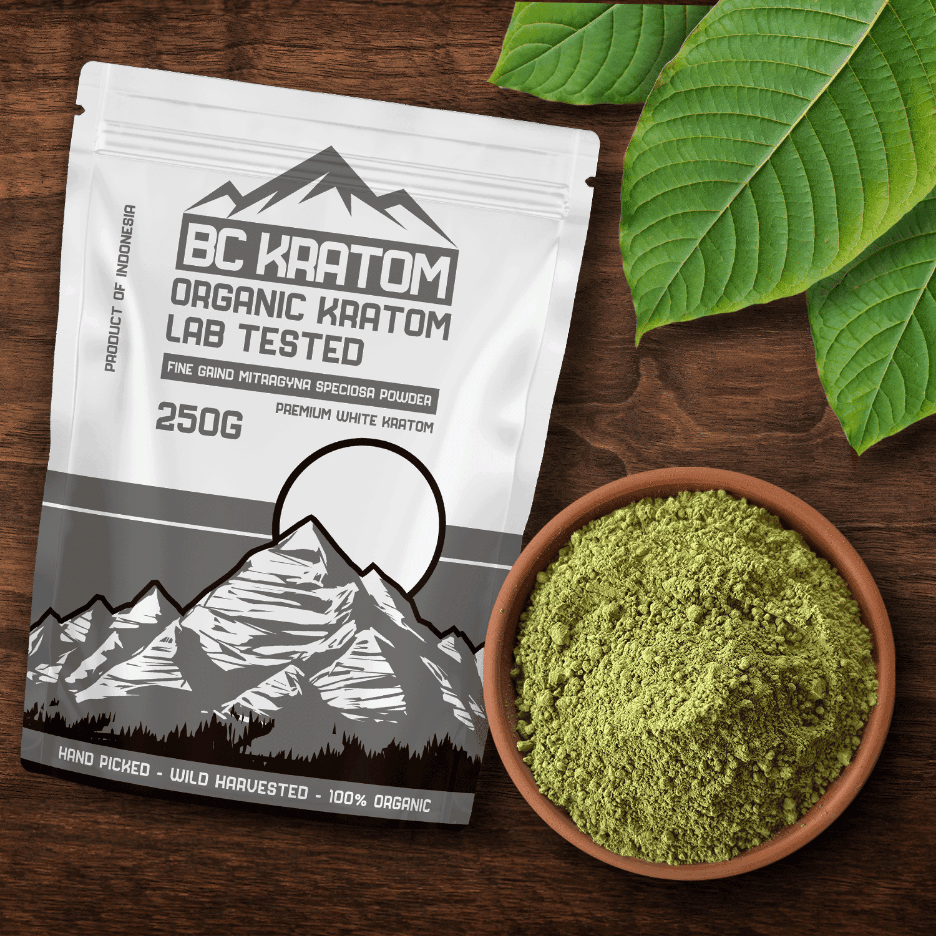
For instance, White Sumatra kratom powder has a discrete profile that distinguishes it from Red and Green veins.
Despite their relative abundance in kratom extracts, Mitragynine and 7 Hydroxymitragynine are chemically distinct. Those properties allow each compound to be explored differently for research purposes.
Other alkaloids in kratom include;
- Speciociliatine
- Paynantheine
- Mitraciliatine
- Corynantheidine
- Isopaynantheine
- Corynoxine
Types of Kratom Products
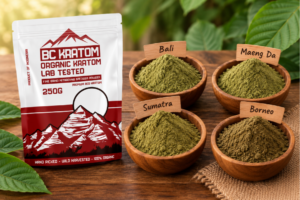
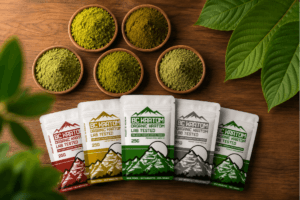
While kratom comes in diverse formulations, powders and capsules are among the most consumed formats.
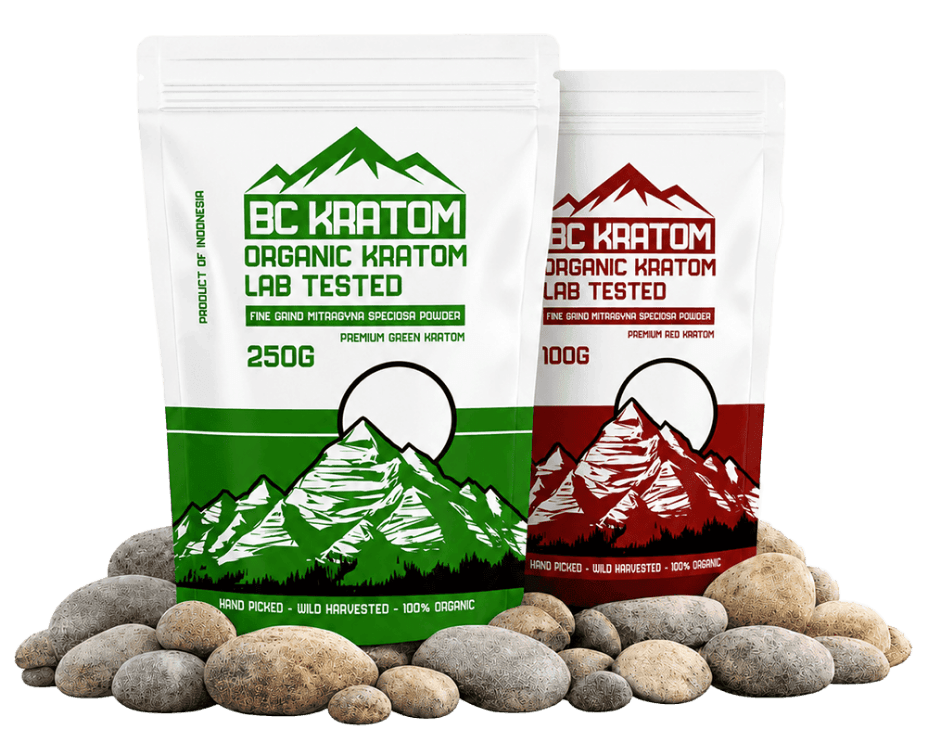
Kratom powder is versatile and is available in different package sizes.
Meanwhile, kratom capsules contain pre-divided amounts of specific strains. Capsules also have the following unique features;
- Discreet appearance
- Travel-friendly
- Available in compact packaging formats
NOTE: There’s no universal winner in a kratom capsules vs. powder comparison, as each format provides different options for comparing various kratom strains.
Kratom Storage Guidelines
Despite its resilience, kratom may go bad if improperly stored. Poor storage methods can ruin product quality over time.
Here are some storage guidelines to observe;
- Store in a cool, dry location, away from direct sunlight.
- Keep the packaging tightly sealed to extend its freshness.
- Maintain kratom in its original premium packaging.
- Check the product’s expiration date regularly.
Learning About Kratom Canada Matters
When kratom first appeared in Canada, skeptics might have dismissed it as a passing fad. However, emerging reports indicate that the plant has taken the country’s botanical scene by storm, as researchers and collectors explore its characteristics.
Even more reassuring is that kratom is presently available across Canada. Researchers may access and analyze the plant without breaking the law.
Ready to learn more?
Browse our kratom selection of quality-tested strains and formulations to explore the diverse characteristics of this unique botanical.
FAQs
1. What is kratom and where does it come from?
Kratom is a tropical evergreen tree originally from Southeast Asia, which has since garnered significant interest across Canada.
Much of the kratom sold in Canada comes from Thailand, Indonesia, and Malaysia. However, some Southeast Asian countries have since restricted access to the plant.
2. What is kratom made from?
3. What are the different types of kratom strains?
Kratom comes in three primary strains, each with distinct profiles. They include White Veins, Red Veins, and Green Veins.
White Vein Kratom derives from younger leaves, Red Veins come from late-harvested leaves, while Green Veins represent mid-maturity